
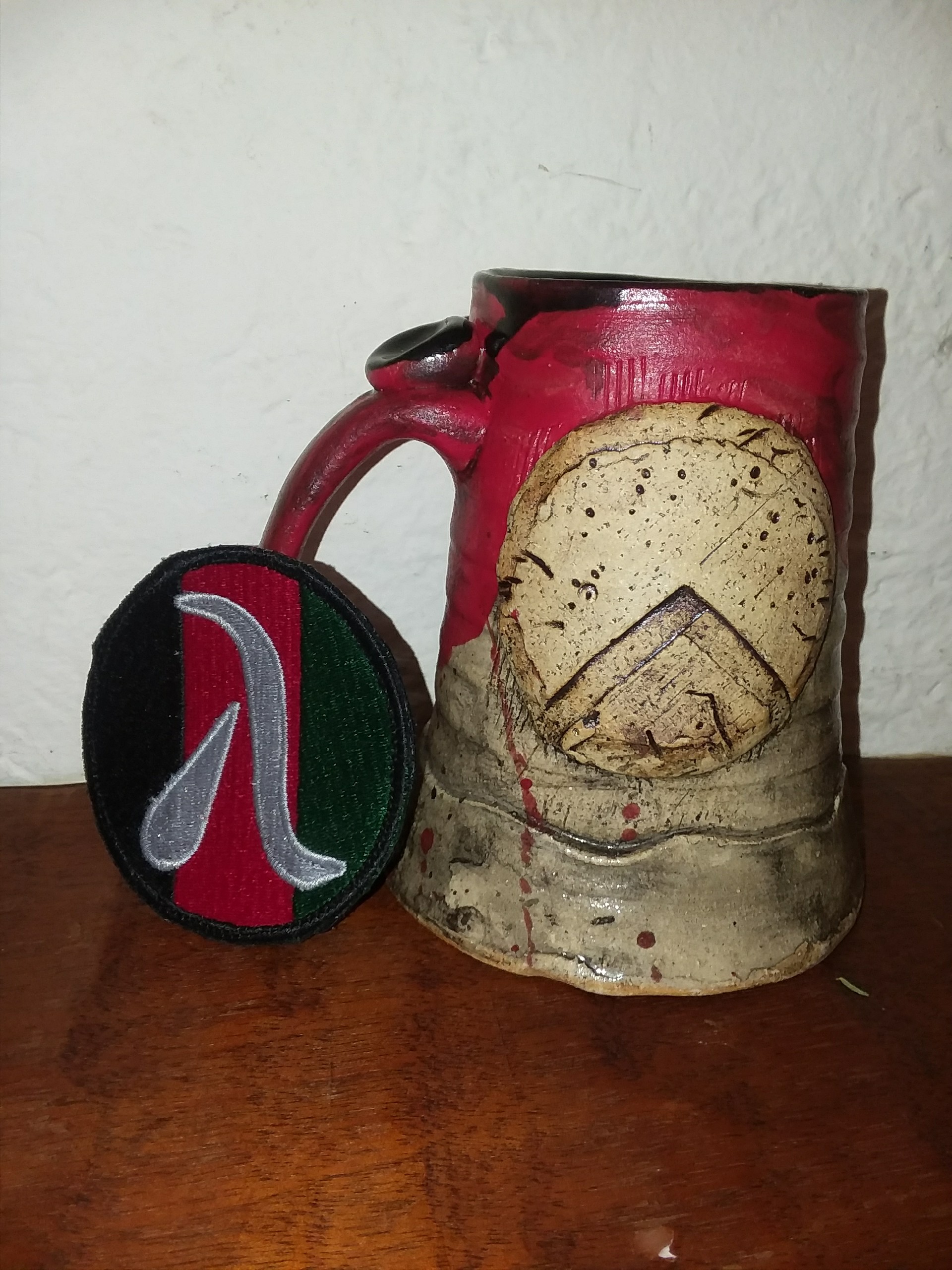
It was June 1999, and Prosser was about to leave Hawaii. He came to give Jim a gift, one that would change Jim’s life. He handed Jim a hardback copy of Gates of Fire, the historical novel by Steven Pressfield about the three hundred Spartans and their legendary stand against the Persians at Thermopylae. Jim returned exhausted from his training, and later that night opened the book. In it, he found this inscription: Jim, We didn’t start off well. . . . I thought you were a young punk platoon leader. Things change—you’re older now. . . . Of all the officers in 2-5 Infantry, I will miss you the most. Your energy, personality and drive are refreshing to be around. No one can say that Jim Gant’s heart is not in the right place. Belief in yourself and your duties are more than half the battle. . . . and along with persistence and drive make all the difference. You have all these qualities and more. It has been my honor and privilege to serve with you. Prosser went on: “This is a book about warriors . . . about men of old. Although fictional, I found it fascinating and full of lessons on character and life. . . . Remember, circumstances do not make a man, they reveal him.” Jim began reading the novel, which is narrated by the lone survivor of the battle, a squire of the Spartan warrior Dienekes. He was astonished by what he found. Every page of Pressfield’s intimate account of the making of Spartan warriors and their heroics at Thermopylae seemed to sharpen and illuminate Jim’s own emerging beliefs about combat. “It spoke to me like the Bible,” he said. It was an intellectual and spiritual affirmation of truths that had come to him in the trenches and drill fields, about leading men in war. “I immediately knew those people [the Spartans]. I knew that time. I was meant to be a Spartan, perhaps I was. Every single part of that touched me. It was as though I had a very focused black-and-white picture, and Gates of Fire gave it color.” Jim identified powerfully with the Spartan culture, and with the practice of young boys leaving their birth families to become part of a brotherhood of men-at-arms. The key to motivating his soldiers, he had learned as a lieutenant, was simple: he loved them. “I try to treat people under my command the way I would want someone to treat my son. When you put it in those terms, it is easy,” Jim explained to me. In coming years, he would act in many ways as a surrogate father to his men. He prepared them for combat, held them and cried with them, and risked his life to protect them and get them home. He told them again and again that when they were wounded in combat, the faces they would see and the voices they would hear comforting them—and the hands responsible for keeping them alive—would be those not of family members but of their fellow soldiers. He also expected his men to love him in return, as much as they loved their own fathers. In giving and expecting so much, he bonded with his soldiers in a way that went well beyond the norm for commanding officers.
-Ann Scott Tyson. American Spartan (pp. 134-135).
Leader – Be THAT, unto you want others – TO BE.
Together WE Transform – always, ALWAYS – TOGETHER.
Live hard. Love harder. Much harder. (Stole it from you again, Brother Chet.)
Jim
1COR13:1-2
 BUILT TO LEAD
Love you, Brother JimmyTHEgant…
Sent from my iPad
<
div dir=”ltr”>
<
blockquote type=”cite”>
I love this post so much, dear Brother Jim. Thank you for building into your Band of BTL warriors. It is a humble honor to stand With you as our beloved brother in the Band.