
There are two words that have followed me out of war. They are not tactical. They are not complicated. They are not poetic. They are simply this:
“You good?”
That was it. No speeches. No counseling session. No motivational quote. Just two words thrown across a battlefield by one man who desperately needed to know if another man still existed.
“T…you good?”
Silence would have been an answer.
“JG…I’m good.”
That was an answer too. Most people misunderstand what those words meant. “I’m good” never meant I wasn’t bleeding. It never meant I hadn’t been shot. It never meant I wasn’t out of ammunition, surrounded, exhausted, terrified or carrying one of my teammates through a kill zone. It never meant everything was okay. It meant something far deeper. It meant, “I’m still here. I still have my sector. I still have my responsibility. Keep moving. Don’t stop because of me. Go.”
That was enough. That was enough. That was enough. (Leaders are repeaters, remember?)
There was an honor in those words. A trust. An understanding that every one of us was already carrying more than any man should have to carry. We didn’t need details in that moment. We needed certainty that the line HAD NOT BROKEN. So we fought. We fought hurt. We fought afraid. We fought tired. We fought because someone had to.
I have come to realize something that has broken my heart. I never stopped answering that way. The war ended. At least everyone else says it did. BUT somewhere along the way, I carried that language home with me.
“Jim…you good?”
“Roger. I’m good.”
No, I’m not.
Sometimes I am bleeding in places no surgeon can reach. Sometimes I wake from nightmares so violent that for several seconds I have no idea where I am. My heart is already sprinting before my eyes are even open. The smoke is still there. The bullets are still there. The fire is still there. Somewhere inside me, that up-armored vehicle is still burning. Sometimes I can’t remember what day it is. Sometimes the depression rolls in like weather. No warning. No logic. No enemy I can identify. One moment the sky is clear. The next, I’m standing in darkness so thick I can’t remember what sunlight feels like.
Sometimes I hear, “Jim, you good?” and the old warrior answers before the disciple even has a chance to speak.
“Roger. I’m good.”
Because that’s what leaders do. Right?
We play hurt. We endure. We carry the weight. We don’t become another man’s burden. That is what I believed. Until I began burying pieces of myself under those two words.
Here’s what I’ve learned AND…it cost me more than I ever wanted to pay.
There is a difference between courage and concealment. There is a difference between endurance and isolation. There is a difference between carrying your cross and refusing to let anyone help you carry it.
Jesus accepted help carrying His.
Why do I still believe I’m above it? The enemy loves my version of leadership. He doesn’t have to kill me if he can convince me to suffer alone. He doesn’t have to destroy me if he can persuade me that admitting weakness somehow dishonors strength. He whispers the lie with a familiar voice.
“They need you.” “You can’t let them see this.” “Keep moving.” “You’re fine.”
AND because I’ve survived firefights, ambushes, betrayal, explosions and loss – – – I almost believe him. ALMOST…
BUT/AND I have learned another lesson from war.
No man or woman survives alone. Not the great ones. Not the legends. Not the professionals. The strongest teams I ever led weren’t strong because we hid our wounds. They were strong because we trusted one another with our lives.
Somehow, after the shooting stopped, I forgot that trust was supposed to continue in that same way.
Leader, listen to me.
Have truth-tellers in your life. Not a hundred. Not ten. A FEW.
The kind who already know what your voice sounds like when you’re not being believable. The kind who recognize the silence between your words. The kind who won’t be impressed by your résumé because they care more about your soul than your reputation. Have people you can call without an agenda. People you can simply say to, “I’m not good today. I just wanted to hear your voice.”
No explanation. No performance. No pretending. Just truth.
And if your phone rings one day…
Answer it.
Drop what you’re doing. You have no idea how much courage it took for that call to be made. The words may sound ordinary.
“Hey…you got a minute?”
But what you cannot hear is everything underneath them. “I don’t know how much longer I can carry this.” “I’m exhausted.” “I’m drowning.” “I’m scared.” “I don’t want to be alone.”
The greatest act of leadership you may perform that day will not be giving advice. It will be staying. Listening. Refusing to let another human being disappear into the darkness by himself.
Today, if you ask me, “Jim…you good?”
I’m going to try to answer differently. Sometimes the answer will still be, “Roger. I’m good.” AND when it is true, I will mean it.
BUT some days, by the grace of God, I hope I have the courage to tell the truth.
“No. I’m not good today.”
BECAUSE…I have finally learned something that took me decades of war to understand. The bravest words I ever spoke on a battlefield were, “I’m good.” The bravest words I may ever speak at home are, “I’m not.”
BOTH require courage.
Only ONE has the power to save my life.
So if you’re reading this, let me ask you the most direct question I know.
You good?
Don’t answer too fast.
2 COR 12:10
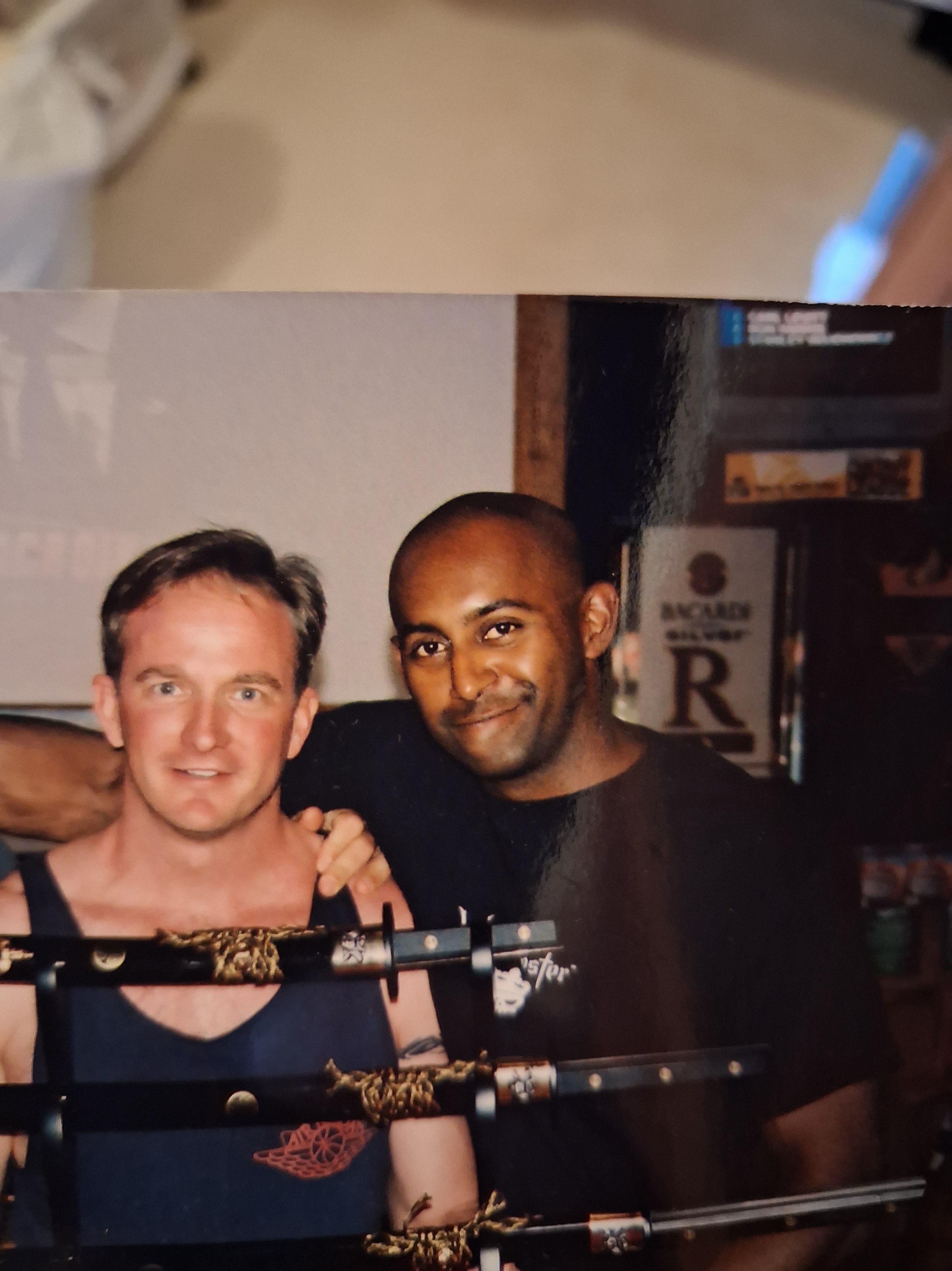
Tony Siriwardene would be his team sergeant, responsible for the daily operation of the team. Tall and athletic, Tony was a native of Sri Lanka who had moved to Arlington, Virginia, at the age of eight. He graduated from Washington-Lee High School and enlisted in the Army as an engineer. In 2003, Tony was the second man assigned to ODA 316, and deployed with Jim twice to Afghanistan. There he proved himself the epitome of a soldier—always doing what was needed before he was asked. Tony was at Jim’s side on every single mission. Tony was the only team member besides himself whom Jim allowed to disarm bombs. Once he ventured with Jim into the Korengal valley even though he was so sick he had an IV in his arm when he drove out the gate. “I will always have something for contact,” he told Jim—and later that day earned his first award for valor in an enemy ambush.
Tyson, Ann Scott. American Spartan: The Promise, the Mission, and the Betrayal of Special Forces Major Jim Gant (p. 57).
 BUILT TO LEAD
Hope you’re good today Jim
I am good. Thank you for the flare!
ONWARD.